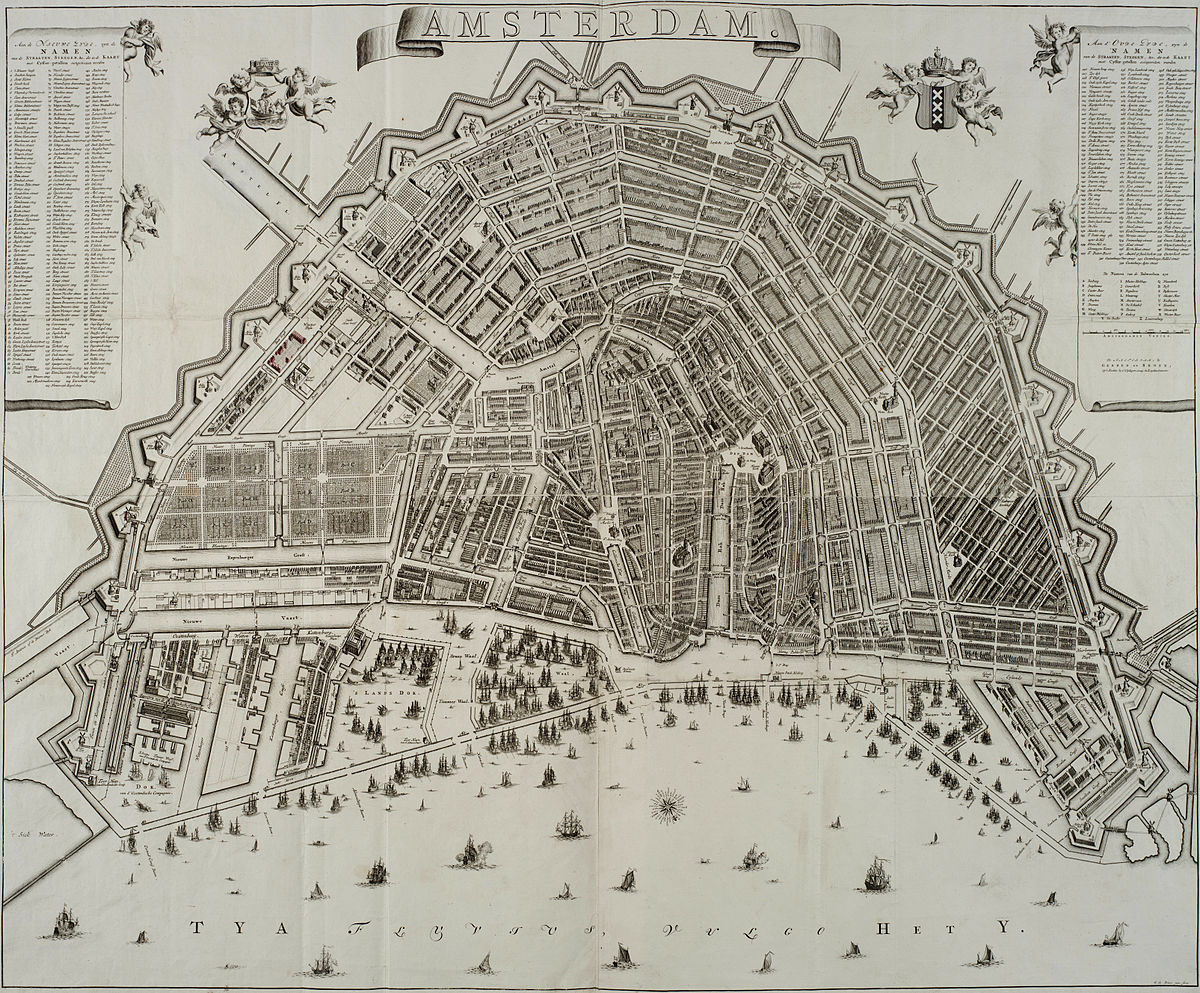
The 1737 map by Gerrit de Broen captures Amsterdam at a moment of supreme confidence and architectural maturity. While the earlier 17th-century maps documented a city in the throes of construction, De Broen’s 1737 edition presents the “completed” masterpiece of the Dutch Golden Age. This map is technically a refined version of his 1724 original, representing the peak of the city’s wealth before the economic shifts of the late 18th century.
What sets the 1737 edition apart is its incredible attention to the decorative and symbolic elements of cartography. The map features a grand, allegorical title piece where the Maid of Amsterdam is surrounded by symbols of global commerce, such as Mercury and various river gods. This was not merely a tool for navigation but a piece of high-status propaganda, designed to be displayed in the offices of wealthy merchants and the libraries of scholars across Europe. It reinforced the image of Amsterdam as the “Warehouse of the World.”
Beyond the artistry, the 1737 map is a vital record of the city’s green spaces and industrial infrastructure. It meticulously documents the Plantage area, which at this time was a collection of leisure gardens and parks for the elite. Additionally, De Broen provided a clear look at the twenty-six massive bastions that ringed the city, each topped with a windmill. These mills were the engines of 18th-century industry, and their precise placement on this map offers historians a clear view of how the city balanced defense with daily production.

Read more about Gerrit de Broen
Explore the Evolution of Amsterdam
The 17th-century cartography of the Dutch Republic is a testament to the city’s rapid global expansion. This post is part of our comprehensive chronological archive.
- ← Previous Map: 1721 Covens & Mortier
- Main Collection: Maps of Amsterdam: A Chronological Guide
- Next Map: → 1770 Jan Mol
This 1737 map of Amsterdam by Gerrit de Broen is a key part of our Chronological Guide to the Maps of Amsterdam, which documents the city’s growth from a medieval port to a global capital.
Disclaimer: These works are in the public domain in their country of origin and other countries and areas where the copyright term is the author’s life plus 100 years or fewer.