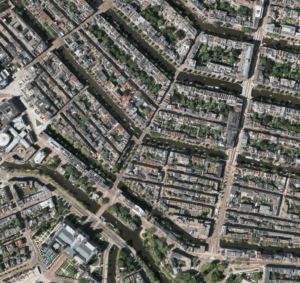
I am not the first (nor will I be the last) person to fall down the rabbit hole of cataloging the bridges of Amsterdam. This obsession effectively started with the Gemeente itself, when they began the monumental task of numbering each span to bring order to the city’s watery maze. Since then, a dedicated community of “bridge-hunters” has taken up the mantle. Below, I want to give some shout-outs to the fellow archivists and enthusiasts who are publishing incredible work on the Bruggen van Amsterdam. Some of these resources stay within the canal ring, while others venture much farther afield, because while it often feels like the entire world is crammed into Amsterdam on a sunny weekend, there is a whole universe of historic engineering waiting to be discovered beyond the A10.
Amsterdam
in English
Bridges of Amsterdam
For anyone planning a stroll through the Dutch capital, Bridges of Amsterdam serves as a gorgeous interactive guide to the city’s most iconic and obscure crossings. The website features high quality photography and detailed profiles of hundreds of bridges, ranging from the famous Skinny Bridge on the Amstel to the brightly colored “animal bridges” near the Artis Zoo. It is a perfect resource for photographers and travelers who want to see the city from a different perspective.

Who also have a great map of all the bridge locations and which ones they have already created posts about.
in Dutch
Amsterdam Archives
To see how the bridges of Amsterdam have evolved from the Golden Age to the present day, there is no better resource than the Stadsarchief Beeldbank. This massive digital image bank contains nearly 500,000 photographs, prints, and drawings from the City Archives. It allows you to step back in time and view the city’s waterways through the lenses of legendary photographers and the eyes of historical illustrators, providing an unparalleled visual record of how these iconic structures have defined the Amsterdam skyline for centuries.
The Amsterdam Archive which is interesting not just for the bridge history but for history of all of Amsterdam including the Jokinen Plan to demolish the historic city centre.
Amsterdam City Council / Municipality
Dashboard of the bridge and quay refurbishments and replacements programme alongside updates on bridge conditions and other information.

Bruggen van Amsterdam
For the true bridge completist, Bruggen van Amsterdam is perhaps the most ambitious catalog of city infrastructure ever assembled. Managed by Peter Korrel, known as the “Mokum Bridge Hunter,” the site attempts to document every single bridge, viaduct, and culvert in the city—a total that now exceeds 14,000 objects. While the site is in Dutch, its structure is intuitive, allowing you to click through bridge numbers to find archival photos, historical names, and precise geographic coordinates for even the most obscure neighborhood crossings.

General Information
Dutch Wikipedia
You should also check out Dutch Wikipedia which has a convenient link to all the bridges in order at the bottom of each bridge page.
https://nl.wikipedia.org/wiki/Categorie:Brug_in_Amsterdam-Centrum
YouTube video about Kees Fensbrug
Canal Museum in Amsterdam
To understand the deeper story behind the UNESCO World Heritage site, the Grachtenmuseum offers a beautiful digital exploration of the bridges that define the canal ring. This curated exhibit highlights how these structures are more than just functional crossings; they are the architectural stitches that hold the city’s history together. Through a mix of historical anecdotes and elegant design, the museum provides a thoughtful look at how the evolution of bridge building mirrored the growth of the city itself.

Amsterdam History
Plan Joniken
To truly appreciate the preserved beauty of Amsterdam, it helps to look at the plans that almost destroyed it. The Plan Jokinen was a 1960s proposal by American consultant David Jokinen that suggested filling in several major canals—including the Prinsengracht—to build massive multi lane highways through the city center. This Wikipedia entry detailing his “reconstruction” vision serves as a chilling reminder of how close the city came to trading its historic waterways for an American style concrete jungle.
.jpg/260px-David_Jokinen_(1967).jpg)
Worldwide Bridges
The Bridgehunter’s Chronicles
Exploring the world often means looking at the structures that connect it, and few places document those connections as thoroughly as The Bridgehunter’s Chronicles. Part travel guide and part historical record, the blog takes readers on a journey through the most unique and endangered bridges across the globe. Whether you are looking for a scenic tour of stone viaducts in Saxony or the story behind a forgotten Midwest river crossing, you will find a wealth of photography and history here.

https://bridgehunterschronicles.wordpress.com
Official Data & Interactive Tools
Maps.amsterdam.nl (The Infrastructure Layers)
This is the official interactive map portal for the City of Amsterdam. It is an incredible tool for data nerds because you can toggle “layers” to see specific infrastructure.
If you want to see the city through the eyes of a municipal planner, this is the place. It is a treasure trove of interactive layers where you can toggle everything from historic quay wall data to the exact location of every monumental tree. For bridge hunters, it is the best way to see how the city’s “skeleton” has expanded since the 1800s.
- What: It allows users to see the city’s growth since 1850, identify monumental trees, or—most importantly—look at the Basiskaart (Base Map) which includes every numbered bridge and quay wall.
- Link: maps.amsterdam.nl
The Amsterdam Time Machine (Historical Deep Dive)
Managed by the University of Amsterdam and several heritage partners, this project aims to create a “linked data” web of the city’s past.
This is a high-tech research project that aims to create a “Google Earth for the past.” It links historical maps with archival data, allowing you to visualize how the canal ring and its connections looked in different centuries. It is an incredible resource for understanding the bridges not just as crossings, but as part of a living, breathing urban history.
- What: It connects old maps with historical data about residents and buildings. It is a more scholarly, “big picture” look at how the canal network functioned as a living organism over the centuries.
- Link: amsterdamtimemachine.nl
Waternet: Boating & Bridge Operations
Waternet is the organization that actually operates the moving bridges.
For a look at the “living” side of the city’s infrastructure, Waternet is essential. They are the ones who actually keep the city moving by operating the manual and electric bridges. Their site is great for checking bridge opening schedules or seeing which historic spans are currently undergoing the “TLC” of modern maintenance.
- What: It provides the practical side of bridge life, including the operating hours and live updates on which bridges are currently under maintenance or broken. It’s the “living history” of how the city moves today.
- Link: waternet.nl/en/service-and-contact/boating-in-amsterdam/
UNESCO World Heritage: The Canal District
Since the canal ring is a UNESCO site, the official nomination documents and “Urban Heritage Atlas” are publicly available.
If you have ever wondered why certain bridges are protected so fiercely, this is the official paperwork. It contains the formal justification for Amsterdam’s status as a World Heritage site, focusing on the unique hydraulic engineering and the “Outstanding Universal Value” of the canal network.
- What: These documents contain the “Statement of Outstanding Universal Value,” which explains the global significance of Amsterdam’s hydraulic engineering. It’s the best place to find the formal justification for why these bridges are protected.
- Link: whc.unesco.org/en/list/1349/
A few “Bonus” Curiosities
- The MX3D Bridge: If you want to see the future of the city, link to the project page for the 3D-printed stainless steel bridge that was installed in the Red Light District. It is a wild contrast to the 17th-century stone arches.
- The Seven Bridges View: For those looking for the “Instagrammable” side, this explains the famous vantage point at the intersection of the Reguliersgracht and Herengracht where you can see seven arches in a perfectly straight line.
@8lettersuk