So as you know there was a delay in pictures for bridge 23 caused by logistics of the bridge not being between bridges 22 and 24.
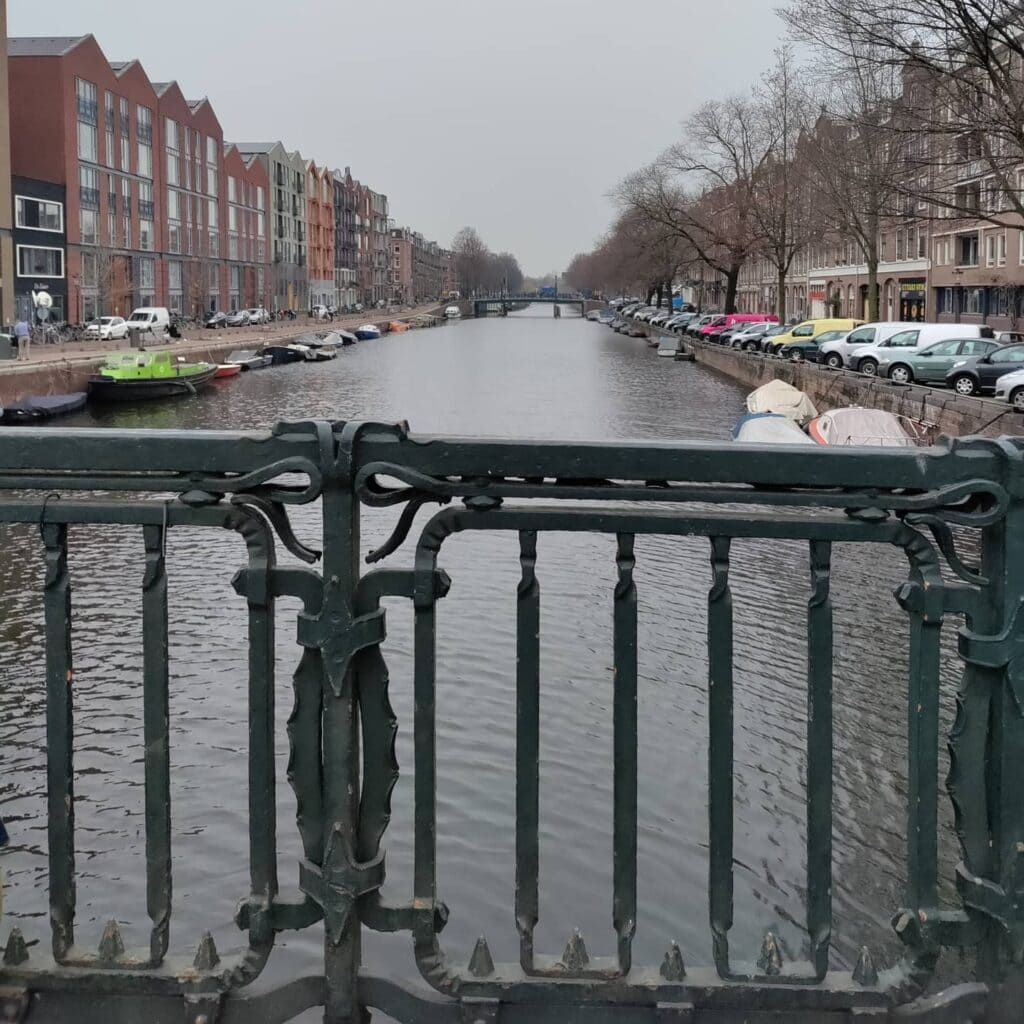
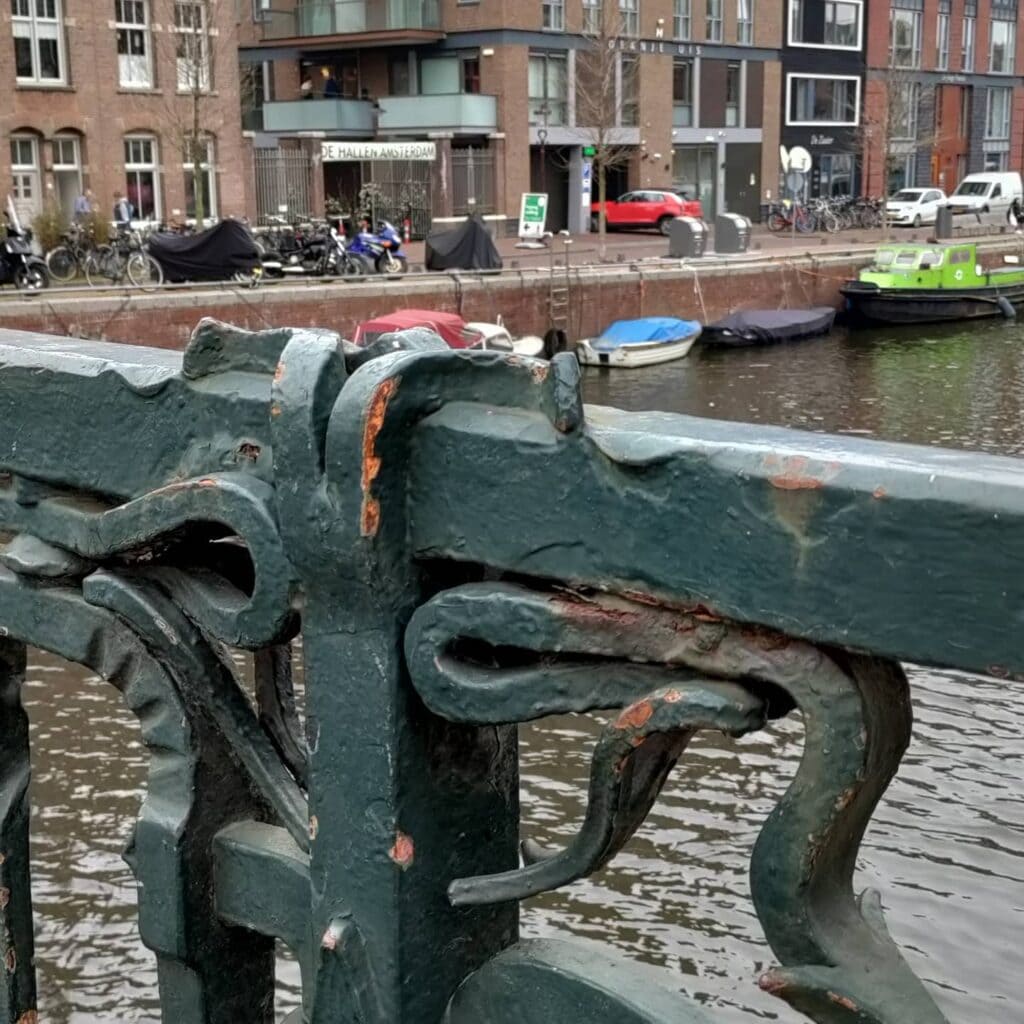
Bridge 22 is located in the Kinkerstraat and spans the Bilderdijkgracht in Amsterdam West. It’s relatively new for Amsterdam (1929) and was built by Piet Kramer, who built eight of the bridges in Amsterdam and his signature style means granite and decorative ironwork.
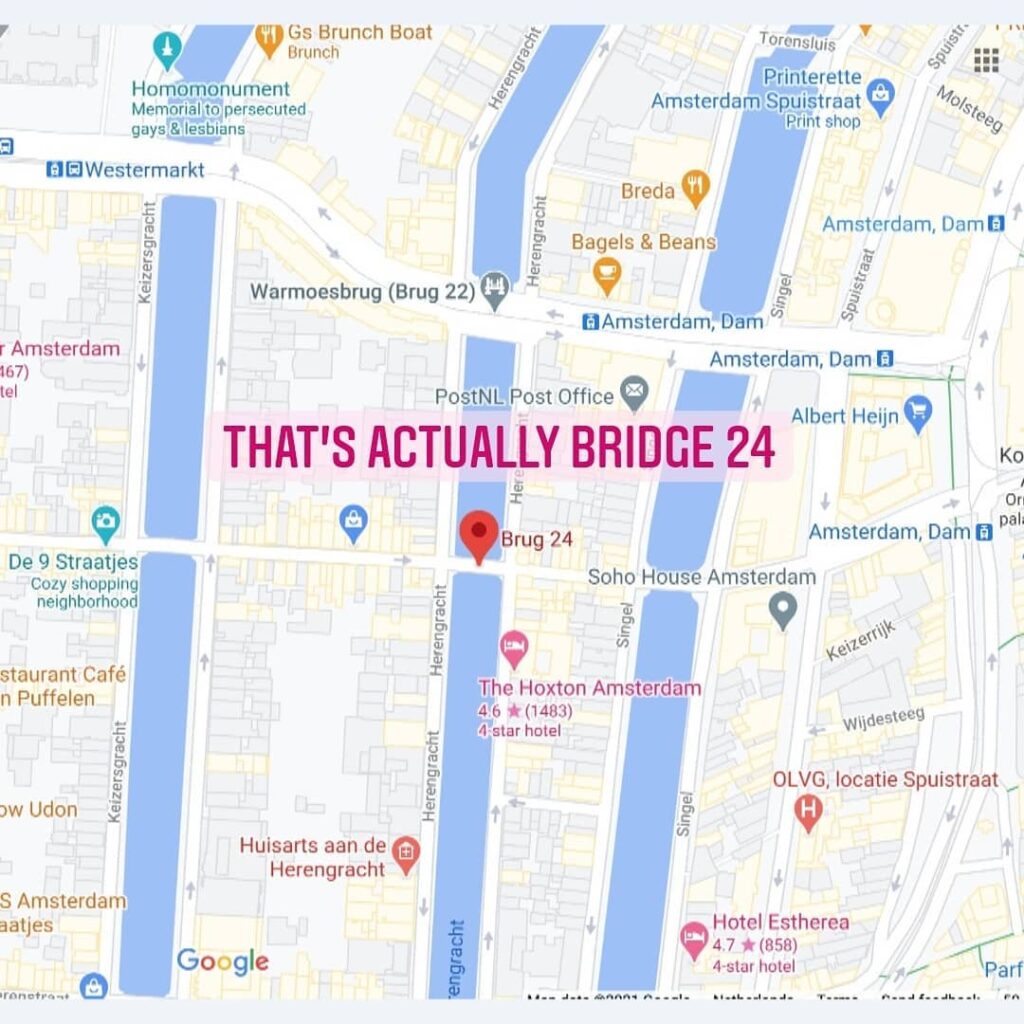
Bridge number 23 had previously been assigned to the bridge along Herengracht over Warmoesgracht in the center of Amsterdam. When the Warmoesgracht was filled in 1894, to make way for the Raadhuisstraat, the old bridge was demolished, and number 23 became available for use again.
Personally I would just not reuse the numbers but hey I didn’t design the system.




Bridge number 23 had previously been assigned to the bridge along Herengracht over Warmoesgracht in the centre of Amsterdam. When the Warmoesgracht was filled in 1894, to make way for the Raadhuisstraat, the old bridge was demolished, and number 23 became available for use again.
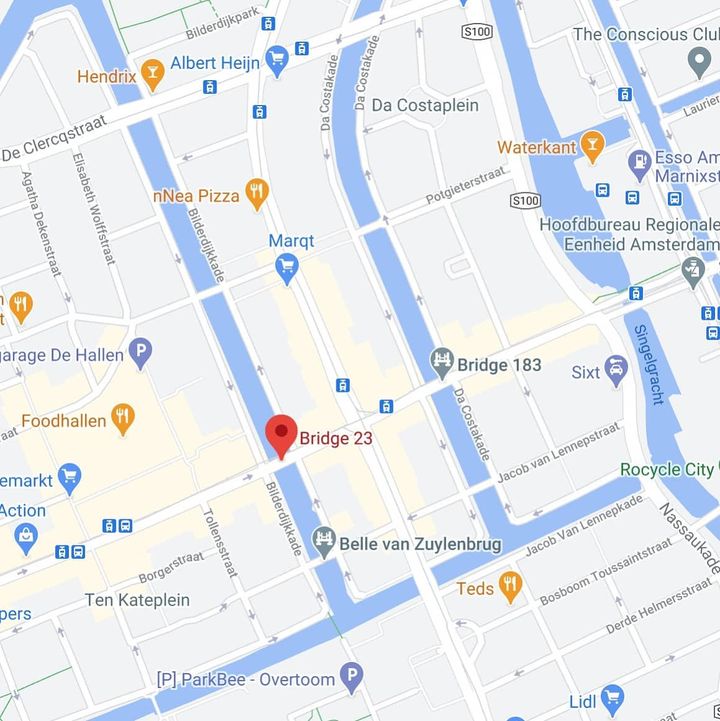
Since 1929 bridge 23 has been located in the Kinkerstraat and spans the Bilderdijkgracht in Amsterdam West.
Bridge 23: The Kinkerstraat Bridge Over the Bilderdijkgracht
A Piet Kramer Bridge in the Working Heart of Amsterdam-West
There are bridges in Amsterdam that announce themselves. The P.L. Kramerbrug sweeps over the Amstelkanaal with granite sculptures, iron lanterns, and a keeper’s house that declares its own importance. The Torensluis spreads its broad back across the Singel with the authority of a public square. And then there are bridges like number 23 on the Kinkerstraat, a sturdy, no-nonsense crossing over the Bilderdijkgracht in Amsterdam-West that does not call attention to itself, but rewards those who stop to look.
Bridge 23 is, in many ways, a better argument for Kramer’s importance than his most celebrated monuments. The P.L. Kramerbrug exists to be admired. Bridge 23 on the Kinkerstraat exists to be used, every day, by thousands of people who may never pause to note that the man who designed it also shaped the most recognisable stretches of Amsterdam’s canal landscape. That quiet ubiquity is exactly what made Piet Kramer so fundamental to the city.
1. A Canal Named for a Poet
To understand Bridge 23, you first need to understand the canal it crosses. The Bilderdijkgracht is a canal in Amsterdam-West, named after the poet and historian Willem Bilderdijk. The first section of the canal, near the Jacob van Lennepkanaal, was dug in 1878 alongside the then-new Bellamybuurt neighbourhood. Work on the final section connecting the Kostverlorenvaart and the Hugo de Grootgracht was not put out to tender until 1903. Wikipedia
This phased construction tells an important story about the neighbourhood’s growth. The Bilderdijkgracht was not a medieval waterway or a Golden Age canal. It was a purpose-built infrastructure canal, dug to serve a rapidly expanding working-class district that Amsterdam needed to accommodate its swelling industrial population. The streets around it, including the Kinkerstraat, were laid out as straight, functional thoroughfares built for people who worked rather than for merchants who traded. Kinkerstraat takes its name from the Dutch poet and lawyer Johannes Kinker (1764–1845). Like the canal, the street was named for culture and respectability, even as the neighbourhood was built primarily for labour.
The Bilderdijkgracht connects the Hugo de Grootgracht and Kostverlorenvaart at the Bilderdijkpark in the north with the Jacob van Lennepkanaal in the south, and is crossed by the De Clercqstraat (bridge 135), the Kwakersstraat/Kwakersplein (bridge 164), the Kinkerstraat (bridge 23), and the Jacob van Lennepstraat (the Belle van Zuylenbrug, bridge 184). Bridge 23 is therefore one of four crossings on this canal, and it sits at what was, and remains, the busiest and most commercially active point along the entire waterway.
2. A Predecessor and Its Steel Urinoir
Bridge 23 replaced a narrower predecessor from 1895. That earlier structure was an iron bridge, and a photograph from around 1900 held in the Stadsarchief Amsterdam shows it with three openings for boat traffic and, notably, a steel public urinal at its southwestern corner. When the new bridge was built, the steel urinal was replaced by a half-underground facility with two urinal stations. That facility was itself removed at the end of the 1960s. Loquis
The presence of the urinal is not an amusing footnote. It is evidence of the kind of district Bridge 23 served. The Kinkerstraat was a busy, dense, working-class shopping street, and the infrastructure around its bridge reflected the everyday, practical needs of a neighbourhood with no pretension to grandeur. Technical drawings from 1894 in the Stadsarchief, which show the design for that 1895 predecessor, confirm that the original bridge was a utilitarian structure of iron, built for function and traffic, not ceremony.
The question of when exactly Bridge 23 was built in its current form is precisely documented. The current bridge dates from 1929. A cornerstone inscription on the bridge itself records “Anno 1929,” visible to anyone who takes a moment to look.
3. Piet Kramer’s Hand: A Bridge Designed in Pairs
This is where Bridge 23 becomes architecturally significant in a way that goes beyond its modest appearance. The bridge was designed by Publieke Werken (P.L. Kramer). It was built not as an isolated commission but as part of a coordinated pair. The bridge shares the same style as the bridge further along the Kinkerstraat over the Da Costagracht (Bridge 183), which was built at the same time.
This pairing is characteristic of Kramer’s method at the Public Works department during the late 1920s. By this point in his career, the exuberant sculptural bridges of the early Amsterdam School period were behind him. The economic constraints of the interwar years, combined with a gradual shift in taste away from the ornamental richness of his earlier work, had pushed Kramer toward a more restrained civic vocabulary. The twin bridges on the Kinkerstraat represent this later register: coherent, well-proportioned, recognisably his, but sparing with the decorative language that defines the P.L. Kramerbrug.
Both bridges are fixed crossings over their respective canals, built in brick with iron railings. The styling of the railings and the treatment of the abutments show the measured, disciplined hand of a designer who understood that even utilitarian infrastructure carries an obligation to its surroundings. In a neighbourhood of dense brick housing blocks, a brick bridge is not merely a material choice. It is a decision to make the crossing feel as though it belongs.
4. The Neighbourhood These Bridges Served
The Kinkerstraat of 1929 was emphatically a working street. The Kinkerbuurt was built at the beginning of the twentieth century when Amsterdam was being expanded, and is an island between the Singelgracht (Nassaukade), the Jacob van Lennepkanaal, the Kostverlorenvaart and the Hugo de Grootgracht. The heart of the district is Kinkerstraat, on which tram lines 7 and 17 run. Bridges of Amsterdam
The tram is important. Bridge 23 carried not just pedestrians and cyclists but the full weight of Amsterdam’s tram network along one of the city’s key western arteries. A bridge here needed to be wide enough, strong enough, and flat enough to accommodate tram tracks, and Kramer’s 1929 design met all of those requirements without sacrificing the quality of finish that distinguished his work from purely engineering-led solutions.
In the 19th and early 20th century, Amsterdam faced a major housing shortage, with many working-class people living in cramped quarters with no electricity or running water. The Kinkerbuurt around Bridge 23 was built in direct response to that crisis, with the Housing Act of 1901 prompting a wave of new construction across the west of the city. The same period that produced the celebrated Amsterdam School housing blocks of the Spaarndammerbuurt and Plan Zuid also produced the more anonymous but no less necessary streets and bridges of the Kinkerbuurt. Bridge 23 was part of that city-building project.
The Oud-West district, of which the Kinkerbuurt is a part, has a population of around 33,000 inhabitants and is a diverse, densely populated and central part of the city, within walking distance of both Museumplein and Leidseplein. Rijksmuseum Today, the neighbourhood has changed character considerably: the Ten Kate Markt a few steps away draws a mix of local residents and visitors, and De Hallen, a cultural complex in a former tram depot just down the street, has transformed the area into one of Amsterdam-West’s most vibrant gathering places. But the daily rhythm of the Kinkerstraat, its trams, its shopfronts, its density, would still be recognisable to anyone who walked across Bridge 23 when Kramer’s fresh concrete was curing in the autumn of 1929.
5. Technical Specifications
Based on confirmed sources, the following can be stated:
- Type: Fixed bridge (vaste brug)
- Location: Kinkerstraat over the Bilderdijkgracht, Amsterdam-West (Kinkerbuurt)
- Construction date: 1929
- Designer: Piet Kramer (P.L. Kramer), Dienst der Publieke Werken
- Materials: Brick abutments and piers with iron railings
- Predecessor: A narrower iron bridge dating from 1895
- Companion bridge: Bridge 183 on the Kinkerstraat over the Da Costagracht, built simultaneously to an identical design
- Notable feature: Cornerstone inscription reading “Anno 1929,” still visible on the bridge today
The bridge does not appear in the current Rijksmonumentenregister as a protected national monument, which places it in an important category: significant as an attributed Kramer work and as part of the fabric of a coherent early twentieth-century working-class neighbourhood, but not yet carrying formal heritage protection. The Monumenten Inventarisatie Project (MIP) has documented it as part of its broader survey of Amsterdam’s built environment.
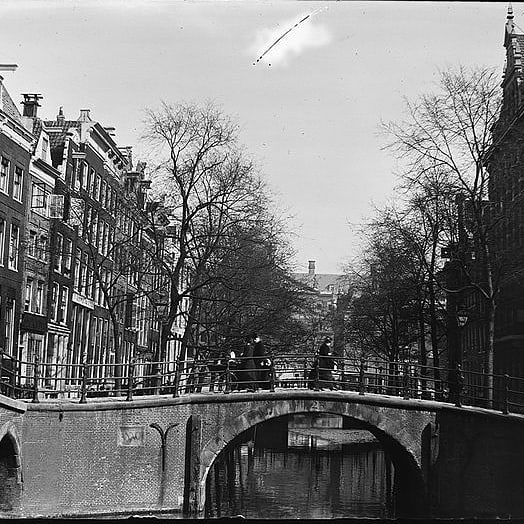
Bridge number 23 had previously been assigned to the bridge along Herengracht over Warmoesgracht in the center of Amsterdam. There had been a bridge there for centuries. When the Warmoesgracht was filled in 1894 , to make way for the Raadhuisstraat , this bridge was demolished, so that number 23 became available. The photographer Jacob Olie in March 1894, a few months before filling in and demolition, took a series of photos of the canal and the bridges.
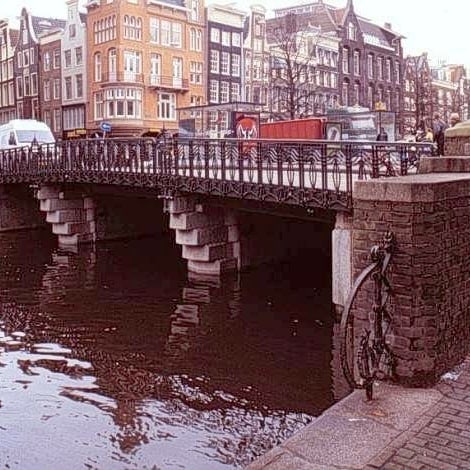
The new bridge 23 dates from 1929 and was designed by Pieter Lodewijk (Piet) Kramer (Amsterdam , July 1, 1881 – Santpoort , February 4, 1961 ) who was a Dutch architect and one of the main representatives of the Amsterdam School style if architecture. He is best known as the architect of the Haagse Bijenkorf (The Hague) and hundreds of bridges in Amsterdam including this one.

Photos
1 Bridge 23 over Warmoesgracht in March 1894
2 Piet Kramer (c) Wikipedia
3 Shipping House (Amrath Hotel) (1913-1916)
4 Fixed plate bridge Keizersgracht / Leidsestraat (1921).
