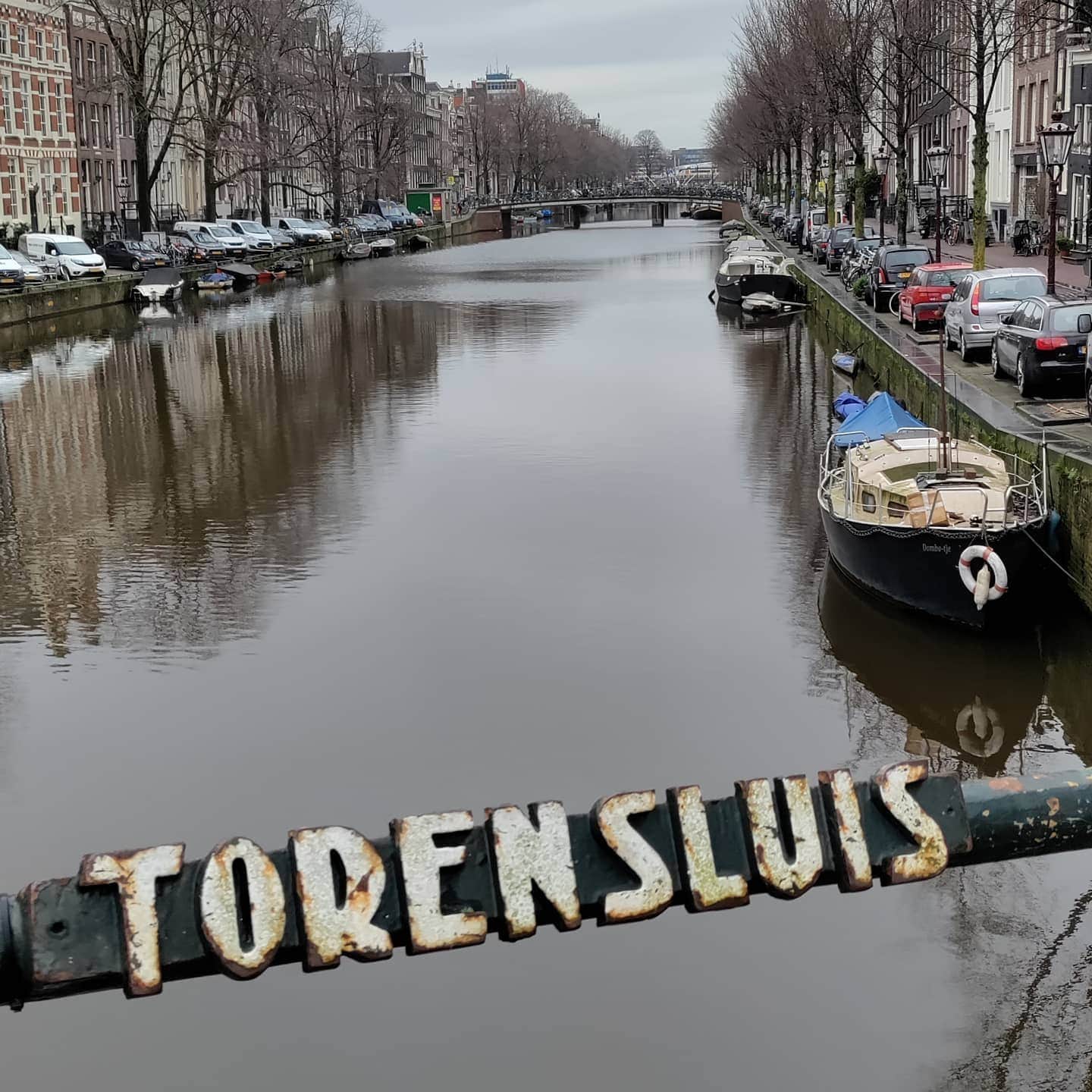
Discovering Amsterdam’s Oldest Bridge: A Look at Torensluis
Torensluis is not just a bridge; it’s a piece of Amsterdam’s history. As the oldest bridge in the city, it has seen centuries of change and development. From its unique design to its cultural and historical significance, there is much to explore and discover about Torensluis.
The Torensluis is a historic bridge over Amsterdam’s Singel Canal that has stood the test of time. It is the oldest original stone bridge in Amsterdam and the widest of its kind.
Bridge number 9 (Brug Negen) Torensluis is an arch bridge over the Singel in the centre of Amsterdam near Dam Square and at 42 meters it is one of the widest in the city. The reason for this is that previously there was a tower on the bridge, the Jan Roodenpoortstoren.
Another reason it is quite wide is that originally in 1648 during the design of the bridge the plan was to build shophouses on the wide bridge similar to the Rialto Bridge in Venice and bridges across the Thames in London. It is not clear if this plan ever came to fruition though it seems unlikely as except for a couple of houses there is no documentary evidence for this.

The Torensluis and the Tower That Shaped a Square
Walk onto the Torensluis on a warm afternoon and you will find café chairs, cyclists weaving between pedestrians, and a bronze writer sitting in contemplation above the Singel. What you will almost certainly not notice, unless you already know to look for them, are the faint outlines in the pavement stones beneath your feet: the ghost of a medieval tower that once rose from this exact spot, marking the edge of the city and the limit of the world beyond.
The Torensluis is Bridge 9 on the Singel. It is Amsterdam’s oldest surviving bridge and, depending on how you measure, its widest. It is 42 metres across at its broadest point. At its canal level, barred windows punctuate the brickwork. Below the pavement are rooms that were, for a long time, used as a prison. None of this is visible unless you go looking. The bridge wears its history quietly, beneath the terraces and the passing boats.
The Tower at the Edge of the City: The Jan Roodenpoortstoren
The Torensluis takes its name from a tower, and the tower explains everything about the bridge’s unusual dimensions. The Jan Roodenpoortstoren was a medieval gate tower that stood at this precise point on the Singel, marking the northern boundary of Amsterdam’s pre-expansion city. The Singel at this location served simultaneously as the city’s moat and its internal canal boundary, and the tower straddled it: a massive defensive structure planted directly over the water, controlling entry and egress through the sluice beneath.
The name “Jan Roodenpoortstoren” is generally parsed as the tower of the Red Gate (rode poort), a reference to the red-painted wooden gates that controlled the opening. The tower was a key element in Amsterdam’s late medieval defensive circuit, which also included the Schreierstoren and the Sint-Antoniespoort (now the Waag). Unlike those two survivors, the Jan Roodenpoortstoren did not survive. But it left an unmistakable impression: the 42-metre width of the Torensluis is precisely the footprint that the tower and its surrounding structures occupied. When the tower was demolished, the platform remained, and the city found itself the unexpected owner of the widest horizontal space on the entire Singel.
The tower was not abandoned immediately. Its final substantial architectural intervention came in 1616 and 1617, when Hendrick de Keyser (1565-1621), the city’s master architect and sculptor, was tasked with embellishing and repairing it. De Keyser was responsible for some of Amsterdam’s most celebrated structures, including the Westerkerk and the Zuiderkerk; his work on the Jan Roodenpoortstoren in those two years brought Renaissance decorative detail to a building whose core was still essentially medieval. It remained a prominent feature of the Singel skyline into the nineteenth century. It was demolished in 1829, by which point its defensive and administrative functions had long since become irrelevant to the city’s urban pattern.
The demolition was the end of the tower as a physical presence, but not as a historical one. In 2003, during a restoration of the Torensluis, excavation revealed the original foundations of the tower still present beneath the bridge pavement. The restoration incorporated a permanent record of this discovery: the outline of the tower’s walls was marked in the bridge surface using darker contrasting pavement stones, set flush with the surrounding material but visually distinct. Today, the footprint of the Jan Roodenpoortstoren is inscribed in the ground you walk across. Most visitors step over it without realising what it records. Look down, and trace the darker stones: they follow the exact lines of walls that Hendrick de Keyser embellished four centuries ago.
The Rooms Beneath the Bridge: The Kerker
The Jan Roodenpoortstoren served many functions across its centuries of existence, and one of them was detention. The structure contained spaces that were used as cells: holding rooms for the city’s minor offenders, debtors, and short-term prisoners. When the tower was demolished and the Torensluis consolidated into its present form as an open bridge platform, those spaces were not destroyed. They were absorbed into the bridge’s masonry, built into the arched chambers beneath the deck.
The kerkers (dungeons or cells) of the Torensluis remain to this day. They are accessible from the canal bank, reached through low doorways in the brickwork at the side of the bridge. If you walk along the Singel at water level rather than across the bridge itself, you will see them: small, heavily barred windows set into the bridge’s flanks, each one a rectangular aperture in the brick a metre or less above the waterline. The bars are still in place. The windows are narrow enough that the light inside must always have been dim.
These spaces have been given more than one purpose since their years of active use as a prison. In recent decades, the vaulted chambers have been used for cultural programming: art exhibitions, small performances, and jazz events have all taken place in the low-ceilinged rooms beneath the bridge deck. The contrast between the chamber’s origin as a detention space and its later role as a venue for music and art is not lost on the organisers who have used it. The Torensluis offers a rare instance of a carceral space repurposed for pleasure without any attempt to disguise its history.
Multatuli, Sitting on the Singel
On the western approach to the Torensluis, seated in bronze on a stone plinth and looking out toward the canal, is a figure that many visitors take a moment to identify. The inscription on the base carries the name Multatuli (a pen name that in Latin means “I have borne much”) and beneath that the dates 1820-1887. This is Eduard Douwes Dekker, born a short walk away at Korsjespoortsteeg 20, and one of the most consequential writers Dutch literature has ever produced.
The statue was made by the sculptor Hans Bayens and placed on the Torensluis in 1987. It is a seated figure, not the conventional standing monument: Douwes Dekker is shown in a posture that suggests thought or weariness, or perhaps both, given what his life involved. His most famous work, Max Havelaar (1860), is a ferocious indictment of Dutch colonial administration in Java, structured as a novel but aimed directly at the Dutch government and trading establishment that enriched itself while Indonesian smallholders starved. The book changed Dutch public opinion on colonialism, contributed to policy reforms in the Dutch East Indies, and has been continuously in print since its first publication.
Douwes Dekker chose the name Multatuli as both a description of his experience and a defiant assertion of his identity as a writer who had suffered in the service of a cause he believed in. He was born on the Korsjespoortsteeg in 1820, in a building that has housed the Multatuli Museum since 1957, the Netherlands’ first house museum dedicated to a literary figure. His birthplace is close enough to the Torensluis that placing his monument on the bridge was a logical decision, situating him near the canal and the neighbourhood he came from.
The placement on the Torensluis serves the statue well. The bridge is a gathering place, trafficked by hundreds of people each day, and it is not far from where he was born. It puts Multatuli where he can be encountered in passing rather than sought out in a dedicated memorial precinct. He sits at the edge of the bridge, overlooking water, which suits the literary character the statue seems to be commemorating: reflective, a little separate, but present.
The Oldest Bridge: A Record of 1648
The Torensluis was constructed in 1648, making it Amsterdam’s oldest surviving bridge in its original structural form. To be precise: this date refers to the current bridge structure, the arch bridge of brick and stone that spans the Singel today. Earlier crossings at this location predate 1648, since the Jan Roodenpoortstoren’s sluice necessarily required some form of passable structure, but the 1648 construction produced the arch bridge that remains.
The claim of “oldest” needs some care. There are other old bridges in Amsterdam, and the definitions of “original,” “surviving,” and “in its original structural form” can produce different rankings depending on the criteria applied. Within the context of the Singel bridge series, the Torensluis is unambiguously the earliest in the sequence and the one that has retained its core structure for the longest continuous period.
The width claim is similarly nuanced. At 42 metres, the Torensluis is genuinely extraordinary by the standards of Amsterdam’s canal bridges, all of which were designed primarily for the practical purpose of crossing relatively narrow waterways. But “widest bridge in Amsterdam” is a claim that requires qualification: the Muntsluis (Bridge 1, at Muntplein) is a wider structure in certain measurements. The more defensible claim for the Torensluis is that it is Amsterdam’s widest open bridge: an uncovered span without permanent buildings constructed on its deck. The Muntsluis’s measurements include enclosed structures built above the water in ways that complicate direct comparison. For practical purposes, and for the experience of walking across it, the Torensluis is without equal in the city: no other bridge gives you 42 metres of open sky, canal view, and pedestrian space simultaneously.
The 2003 restoration was the most recent significant intervention. It addressed the bridge’s structural condition and, in the course of the work, the excavation of the bridge’s subsurface revealed the foundations of the Jan Roodenpoortstoren. The decision to mark those foundations in the pavement rather than simply rebury them gave the restoration a historical dimension that extended well beyond structural repair.
A Square That Happens to Have Water Beneath It
The Torensluis today functions less like a bridge and more like a plein: a city square that happens to be elevated above the Singel. Motorised traffic is excluded or minimal; the wide deck is given over to pedestrians and cyclists. Café and restaurant terraces occupy large portions of the bridge surface, particularly along its western edge. In summer, the Torensluis is one of the more pleasant places to sit in the central city, with the Singel visible on both sides, water traffic passing below, and the profile of the Westerkerk tower visible to the southwest.
The transformation from a functional bridge carrying carriages and carts into a pedestrian square is the result of the city’s gradual reorientation of this section of the Singel away from through traffic. The Torensluis lies at the juncture of several major pedestrian routes converging from the Nine Streets to the south and the Jordaan quarter to the west, and the concentration of foot traffic at this point made the conversion to a predominantly pedestrian space a natural outcome.
The bridge’s dual character (simultaneously a piece of medieval infrastructure and a 21st-century outdoor living room) reflects a pattern common to the most historically significant public spaces in Amsterdam. The city has consistently found that the best use of its most historically layered sites is to let them be used, unreservedly and without excessive heritage piety. The Torensluis is the oldest bridge in the city and one of its most popular terraces. The barred windows of the former cells look out below the tables where people are having lunch.
How to Read the Bridge
Three details reward attention that most visitors skip:
First, the pavement. The darker stones set among the lighter paving of the bridge surface are not an accident of resurfacing or repair. They follow the lines of the Jan Roodenpoortstoren’s outer walls with precision. Walk slowly across the bridge and you can trace the perimeter of a tower that Hendrick de Keyser worked on in 1616. The outline is complete enough to give a clear sense of the tower’s plan.
Second, the canal bank. The Torensluis’s history as a prison is most legible not from above but from below. Walk along the Singel at canal level rather than crossing the bridge, and look at the brick flanks of the structure. The small, heavily barred windows in the lower masonry are the windows of the former kerker cells. They are original. They are still in place. No plaque identifies them for visitors standing on the bank, which is appropriate: they are part of the fabric of the bridge and not a museum reconstruction.
Third, the seated figure at the edge. Once you know that Multatuli was born nearby and that his birthplace now houses the museum dedicated to his work, the placement of the statue on the Torensluis stops feeling arbitrary. He is sitting close to where he came into the world, above the canal that defined the neighbourhood he grew up beside, in a city whose comfortable assumptions about its own moral record his best-known book systematically dismantled.
The Torensluis has been in continuous use for nearly four centuries. It began as a military and administrative structure, became a prison, was reduced to its structural skeleton when the tower above it was demolished, and eventually became one of the most agreeable public spaces in a city full of them. The medieval foundations are still under your feet. The bars on the windows are still in place. The writer is still there on his plinth, watching the boats go past.
Sources: Stadsarchief Amsterdam, maps and plans of the Jan Roodenpoortstoren and Singel fortification system (17th-19th century); Rijksmonument records, Torensluis Bridge 9 (Rijksdienst voor het Cultureel Erfgoed); J. Baggeler and R. van Schaik, Piet Kramer. Bruggenbouwer van de Amsterdamse School (Amsterdam, 2016); Multatuli Museum, Korsjespoortsteeg 20, Amsterdam (established 1957); Eduard Douwes Dekker (Multatuli), Max Havelaar, of de koffieveilingen der Nederlandsche Handelmaatschappij (1860); Torensluis restoration documentation, Municipality of Amsterdam, 2003; municipality of Amsterdam bridge register, Bridge 9 (Torensluis); Gemeentelijk monument records and Rijksmonument designation, Singel bridge series.
Key Facts at a Glance
| Official name | Torensluis |
| Bridge number | 9 |
| Location | Singel, between Oude Leliestraat (west bank) and Torensteeg / Singel approach (east bank) |
| Construction date | 1648 (current arch bridge structure) |
| Heritage status | Rijksmonument (national protected monument) |
| Type | Arch bridge, brick and stone |
| Width | 42 metres (Amsterdam’s widest uncovered bridge; widest open bridge in the city) |
| Historic status | Amsterdam’s oldest surviving bridge in its original structural form |
| Jan Roodenpoortstoren | Medieval city gate tower; embellished by Hendrick de Keyser 1616-1617; demolished 1829; footprint marked in pavement 2003 |
| Dungeons (kerker) | Prison cells in the bridge masonry; barred windows visible at canal level (Singel bank); used for cultural events in modern era |
| Multatuli statue | Bronze by Hans Bayens (1987); Eduard Douwes Dekker (1820-1887); author of Max Havelaar (1860) |
| Multatuli birthplace | Korsjespoortsteeg 20 (Multatuli Museum, established 1957) |
| Modern use | Pedestrian plein (square); café and restaurant terraces; no motorized through-traffic |
| Pavement markings | Darker stones outline the former Jan Roodenpoortstoren walls (marked 2003) |
| Bridge to the south | Bridge 8 (Singel at Raadhuisstraat / Gasthuismolensteeg) |


Torensluis is located on the Singel canal in central Amsterdam between Bridge 8 to the south and Lijnbaansbrug to the north (Bridge 10).
Behind Dam square this bridge is right in the heart of the Grachtengordel or canal belt of the city.
https://w3w.co/forks.shields.ignoring
https://w3w.co/avond.vorkje.klontje
///forks.shields.ignoring
///avond.vorkje.klontje
52.374555, 4.889367
This what3words address refers to a 3 metre square location. Tap the link or enter the 3 words into the free what3words app to find it.
Torensluis is one of the widest bridges in the city because the Jan Roodenpoortstoren once stood on the bridge, a tower and also a prison.
The bridge dates from 1648 and is the oldest Amsterdam bridge that has been preserved in its original state. The dungeons below the tower are still present in the bridgehead.
During the design of the bridge in 1648, the plan arose to build shophouses on the very wide bridge, just like on the Rialto Bridge in Venice. The lease would then recoup part of the bridge’s construction costs. A painting by HG ten Cate from 1829 shows that some houses were later built on the bridge, against the tower but these were removed when the tower was demolished.
The bridge was also previously used as a market square due to the width of the bridge and the lack of buildings.
The dungeons have been restored and made accessible to the public with exhibitions and events now being organised there.
Since 1987 there is a bronze bust of Multatuli (Eduard Douwes Dekker) made by Hans Bayens on the bridge.

Since 2003 , the contours of the existing foundations in the cobblestone pavement have been visible.

Seen in a northerly direction towards the Jan Rodenpoort tower and the Tower Lock.
