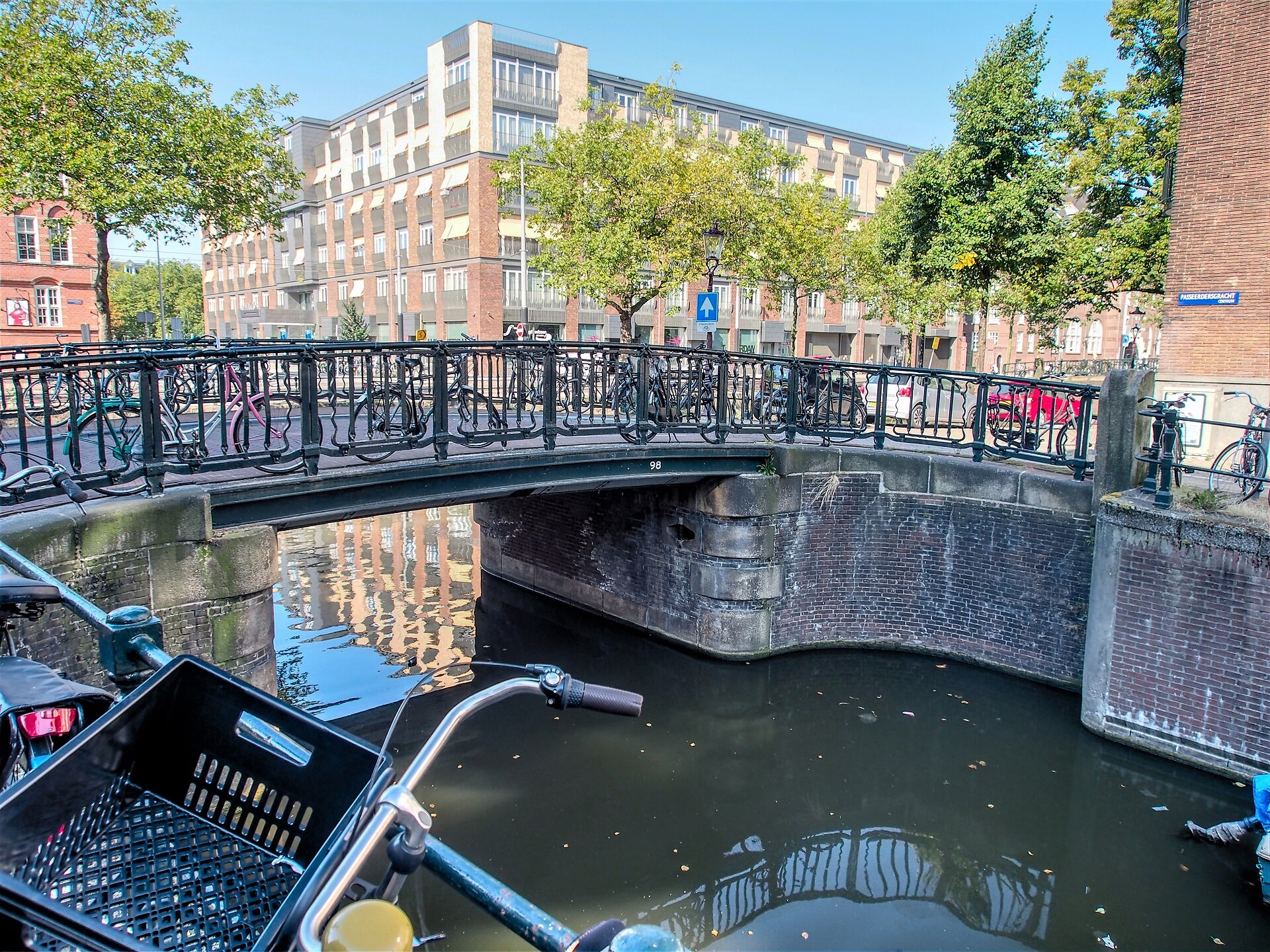
The Canal They Decided Not to Fill: Brug 98 and the 1913 Proposal
Brug 98 exists because of a decision not taken. In 1913 Amsterdam proposed filling in the Passeerdersgracht to create a broader road, and then abandoned the idea. Fourteen years later Piet Kramer built this bridge over the water that survived.
The Proposal That Failed
Filling canals was routine in this period. The Vijzelgracht went in 1933, taking Brug 83 and the original Brug 85 with it, and dozens of other waterways across the city had already gone the same way.
The 1913 proposal for the Passeerdersgracht was dropped on two grounds, and the pairing is unusual for the date: concern about historical preservation, and doubt that the traffic benefit would actually materialise.
The second argument is the more striking. In 1913, a municipal body looked at a scheme to convert water into road and asked whether the road would be worth having. That kind of scepticism did not become common in Amsterdam for another sixty years, until the Nieuwmarkt riots of 1975 forced it.
The canal survived. So did the three bridges over it, of which this is one.
Kramer, 1927
The bridge was built between 9 May and 4 September 1927, a four-month job, to a design by Piet Kramer for the Dienst der Publieke Werken.
It is stone with decorative wrought iron, and it is unmistakably Amsterdam School: the balustrades of ornamental ironwork running into natural stone columns at the ends, which is Kramer’s standard grammar. Where Hildo Krop was involved there would be carved figures too; here the stone is left plain and the iron does the talking.
It was designated a gemeentelijk monument, a municipal monument, on 10 October 1995, in the same round that listed its neighbours.
One of Three, Built Together
Brug 98 is not a single commission. Kramer designed it alongside Brug 99 and Brug 100, all in 1927, and the three went up within months of one another on adjacent stretches of the Lijnbaansgracht and Looiersgracht.
That is why this corner of the Jordaan edge has an unusual visual coherence. Three bridges by one architect, built in one campaign, using one vocabulary of stone columns and wrought iron, and all three listed together in 1995.
They close out the first hundred of the numbered series, and it is a fitting way to end it: the register’s first hundred finishes with a set of Amsterdam School bridges built in a single year over a canal the city had decided, fourteen years earlier, to keep.
The Leather Dressers
A passeerder was a leather dresser. The Passeerdersgracht, the Passeerdersstraat and the Looiersgracht, the tanners’ canal, all record the hide-working trades that clustered on this edge of the city, alongside the ropewalks of the Lijnbaansgracht and the cloth tenters of the Raamstraat.
It is the same toponymic pattern found further north on the Prinsengracht, where the Berenstraat and Reestraat record bear and deer hides. An entire industry has left almost nothing behind except the names of the streets it worked in, and the bridges that carry those names across the water.
What Amsterdam Lost, and What It Kept
The 1913 decision reads differently once you know what happened to the canals that had no such reprieve.
Between roughly 1850 and 1950 Amsterdam filled in a great deal of its water. The Nieuwezijds Voorburgwal, the Elandsgracht, the Lindengracht, the Palmgracht, the Westerstraat, part of the Rokin and the Vijzelgracht were all waterways, and all are now streets. Each filling took its bridges with it, which is why the vacancies in the numbered register cluster around vanished canals rather than scattering at random.
The reasoning was consistent and, at the time, respectable: standing water was believed to spread disease, quay walls and dredging cost money, and a filled canal produced a wide street at no land cost. It took until the 1970s for the city to conclude it had made a mistake, and in one instance, the Houtkopersburgwal, to dig a filled canal back out again.
The Passeerdersgracht is one of the ones that never had to be recovered, because in 1913 somebody asked whether the road would be worth it.
Technical Specifications
- Bridge number: 98
- Name: None, unnamed
- Type: Fixed bridge
- Carries: Lijnbaansgracht, eastern embankment, toward Raamplein
- Spans: Passeerdersgracht
- District: Amsterdam-Centrum
- Coordinates: 52.3667 N, 4.8800 E
- Built: 9 May to 4 September 1927
- Architect: Piet Kramer, Dienst der Publieke Werken
- Materials: Stone with decorative wrought iron, natural stone columns
- Style: Amsterdamse School
- Earliest record: Joan Blaeu’s map of 1649
- Status: Gemeentelijk monument since 10 October 1995
Sources Consulted
- Featured image: Brug 98, Bridge 98, Amsterdam by Alf van Beem, 2017, via Wikimedia Commons, CC0
- Brug 98, Nederlandstalige Wikipedia
- Passeerdersgracht, Nederlandstalige Wikipedia
- Piet Kramer, Nederlandstalige Wikipedia
- Amsterdamse School, Nederlandstalige Wikipedia
- Bruggen van Amsterdam
- Stadsarchief Amsterdam, Beeldbank
- Sebas Baggelaar and Pim van Schaik, Piet Kramer, Bruggenbouwer van de Amsterdamse School (2016)