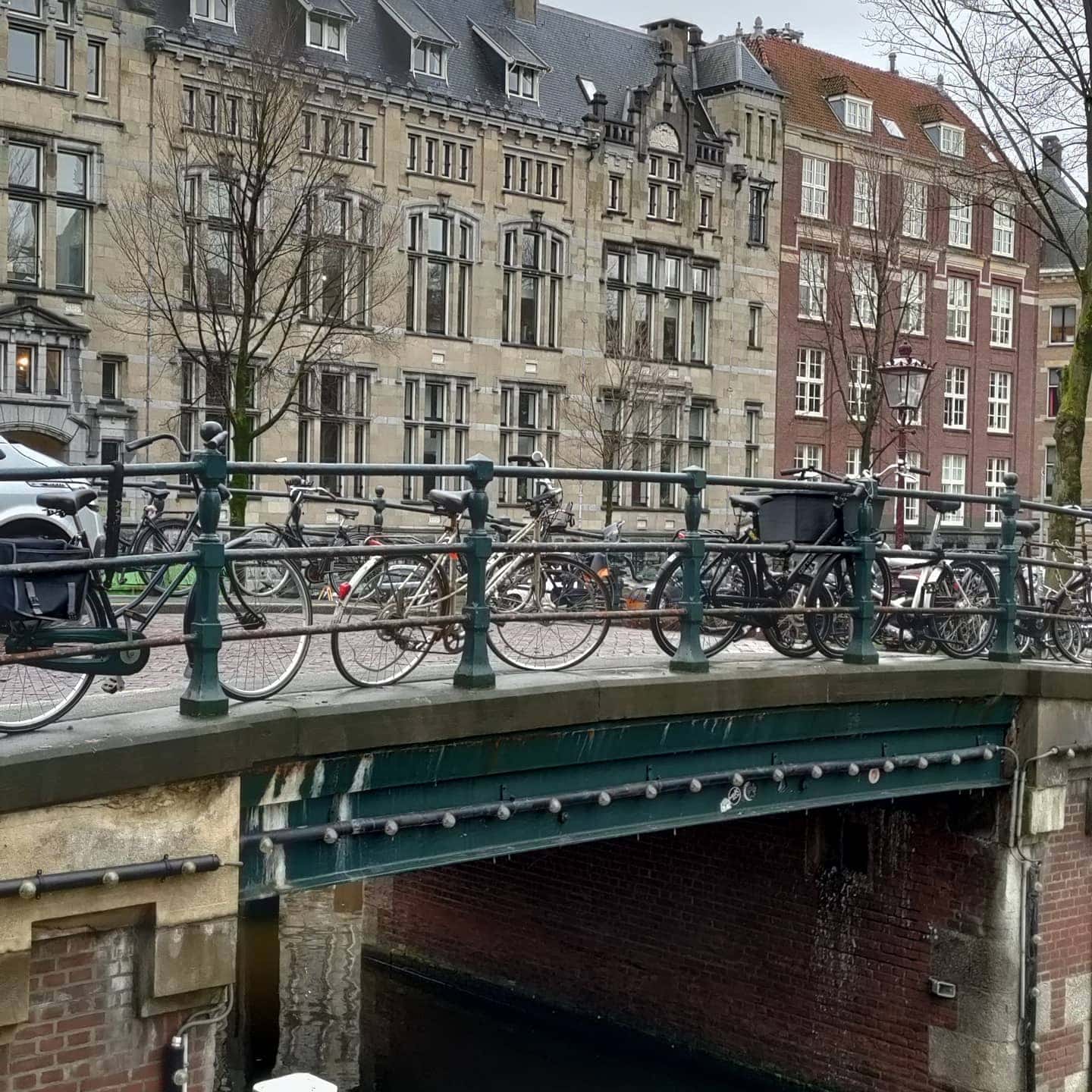
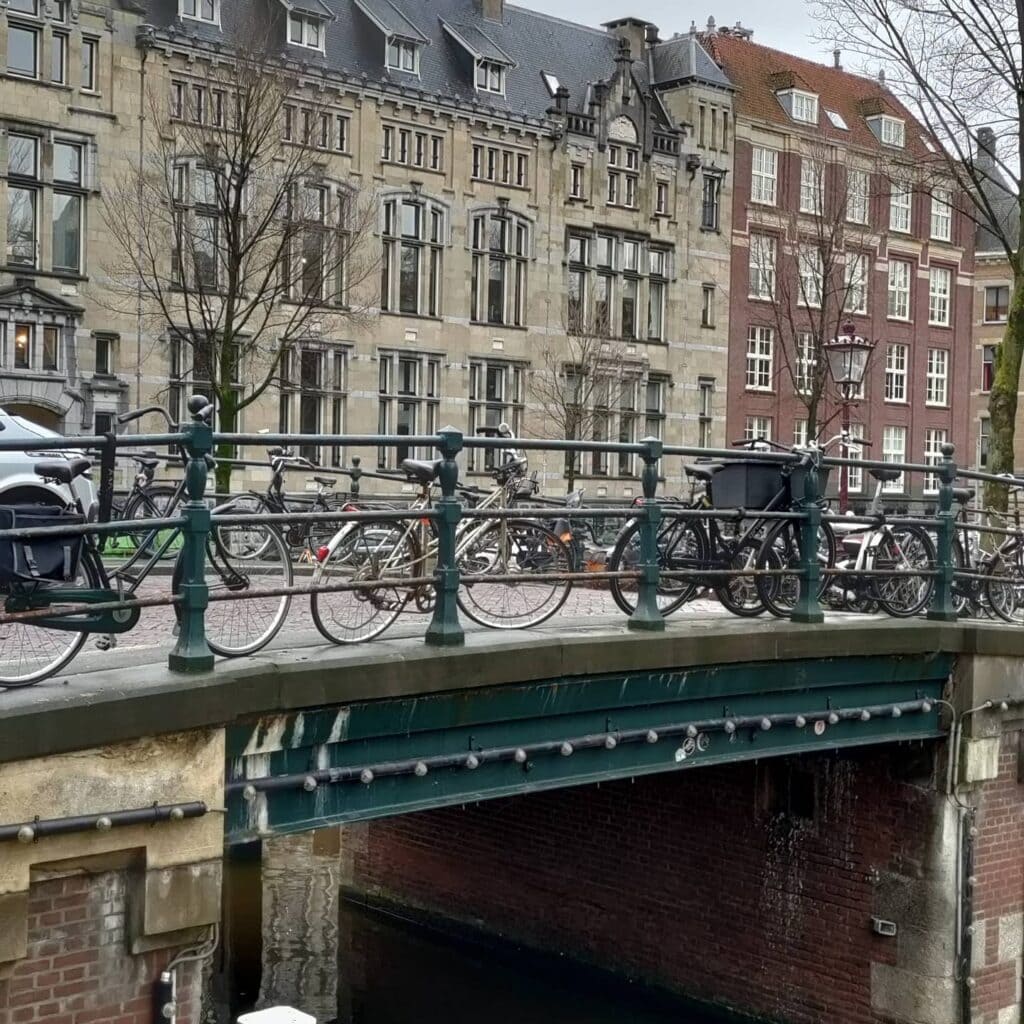
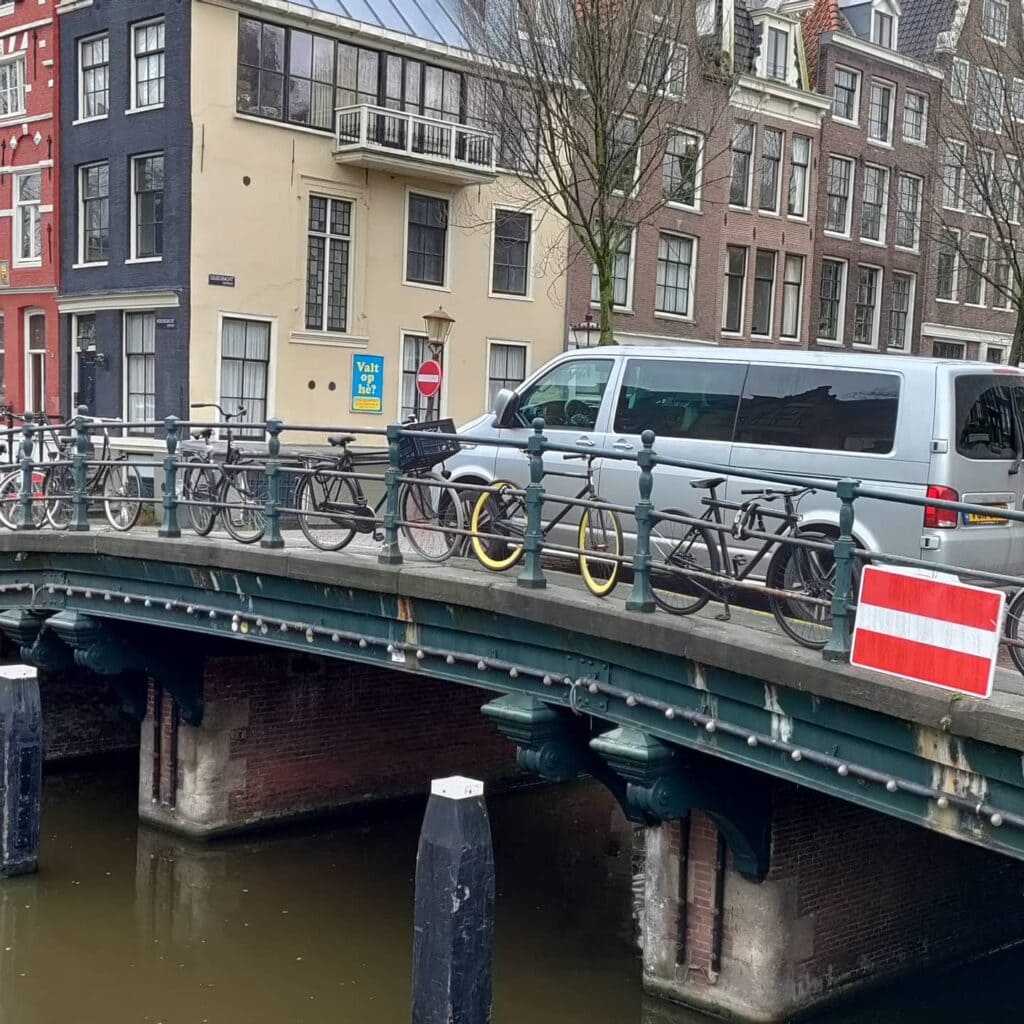
Bridge number 21 is poor relation to Brug 20 the Anton Jolingbrug is both unnamed and unlike its larger counterpart it is not a municipal monument. Like many of the joined bridges in Amsterdam the two bridges have some shared history. Also interesting about this bridge is the way it was widened which you can see on only one side. New metal decorative shoulders atop the stone yokes.

Amsterdam’s Modest Masterpiece: The Untold Story of Brug 21
Amsterdam is a city defined by its bridges. They are the sinews connecting the body of the grachtengordel, its famous Canal District. We often celebrate flamboyant icons like the Magere Brug or the sculptural works of the Amsterdam School. But what of the quiet, functional bridges that form the urban fabric’s very weft and weave? This is the story of one such structure, Brug 21, a seemingly unassuming crossing that carries the weight of four centuries of Amsterdam’s history on its stone and iron shoulders.
A Name Lost to Time: The Anonymous Bridge
Our investigation begins with a puzzle: the name. Brug 21 carries no romantic moniker, no tribute to a saint, a guild, or a local landowner. Its official designation is the pragmatic number assigned by the city’s Public Works Department, or Publieke Werken, in the late 19th century. This numerical system was a product of its time, an administrative necessity as the city modernized and expanded. But the absence of a formal name doesn’t mean it lacks historical association.
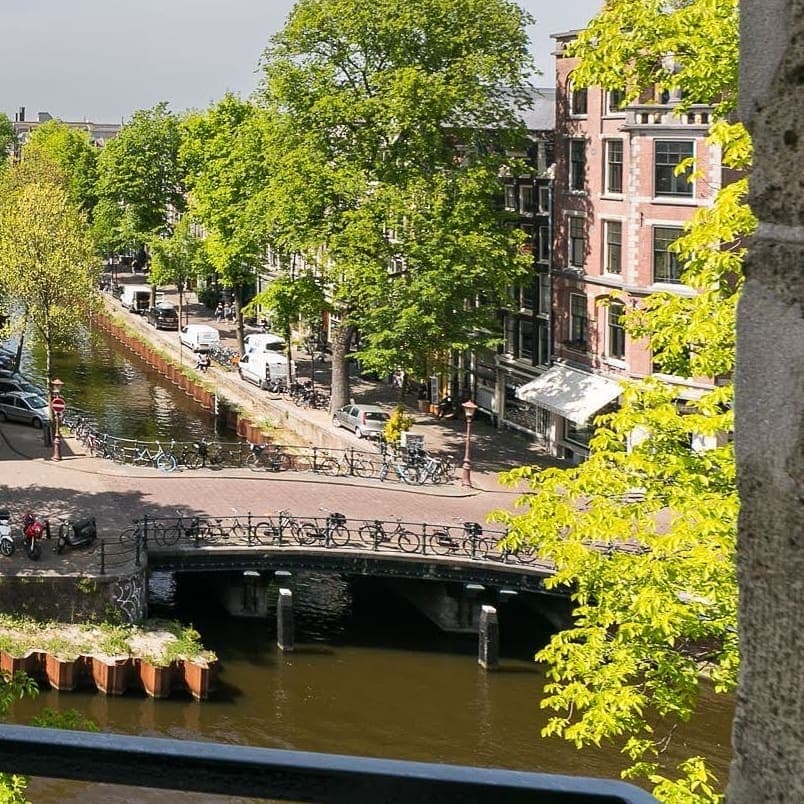
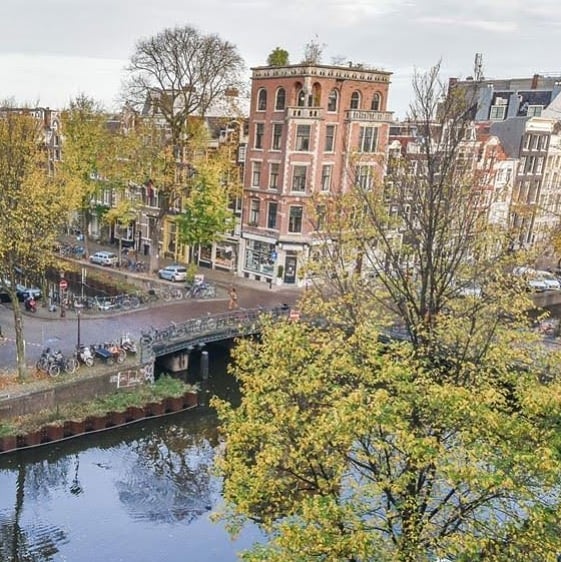
Its identity is instead defined by its immediate neighbours. It is quite literally the bridge where the Herengracht, the first and most prestigious of the grand canals, meets the Leliegracht. To the north, just a few steps away, lies the bustling Jordaan. To the south, across the bridge, you enter the heart of the upscale Negen Straatjes, or Nine Streets, district. Brug 21 is the quiet gatekeeper between these two worlds. Its anonymity is its identity: it is the Herengracht bridge over the Leliegracht, a role it has played for centuries.
From Stone Arch to Iron Ligger: A Structural Evolution
The story of Brug 21 is a masterclass in Amsterdam’s structural evolution. We can trace its lineage back to the very genesis of the Canal District. The magnificent 1625 map by Balthasar Florisz van Berckenrode, one of the city’s first great cartographers, clearly depicts a bridge at this exact spot . It was a typical 17th-century welfbrug, a proud stone arch bridge with three passageways, gracefully spanning the newly dug Lely Graft over the Herengracht . This was a bridge built for a city of barges, merchant vessels, and the quiet clip-clop of hooves.
For over 250 years, this arched form served its purpose, as captured in a beautiful 1770 drawing by Hendrik Keun . But the 19th century brought relentless change. The shift from maritime commerce to wheeled traffic, from horse-drawn trams to automobiles, rendered the old arched bridges obsolete. Their humps were too steep, their arches too narrow. The city had to be flattened for the modern age.
In July 1886, the transformation began. The old stone arch was deemed “niet meer toereikend,” no longer sufficient . Workers erected temporary noodbruggen to keep foot traffic flowing while they set about demolishing the centuries-old superstructure. The project, completed in early 1887, was part of a coordinated effort, as the adjacent Brug 20 over the Herengracht was similarly “verlaagd en verbreed,” lowered and widened, at the same time .
The result was a completely new bridge. The romantic arch was replaced with a utilitarian liggerbrug, a fixed girder bridge. This was the no-nonsense, industrial-age solution. While Brug 20 would later be renovated with more flourish, Brug 21 retained the honest, functionalist aesthetic of the 1887 Public Works Department. It is a time capsule of late 19th-century civil engineering, a period when efficiency was the ultimate aesthetic.
Architectural Lineage: The Art of the Anonymous
If you are searching for the flamboyant sculptural signature of an Amsterdam School master like Piet Kramer or Jo van der Mey, you will not find it here. The current Brug 21 predates their most famous works by decades. Its architect is not a celebrated individual but the collective expertise of the Publieke Werken in the 1880s. This was a period of standardization, of creating robust and reliable infrastructure.
Yet, even in its utilitarianism, there is art. Look closely at the bridge’s stone jukken, the piers that support the widened roadway. The Wikipedia article points out the “versieringen,” the decorations on these stone elements . They are not the dramatic, expressionist carvings of the later Amsterdam School, but rather subtle, robust details. Think of them as a bit of restrained elegance applied to a workhorse. The iron railings, too, are a product of their time, simple and geometric, providing a delicate counterpoint to the heavy masonry.
The bridge’s material palette speaks of permanence: brick for the mass, hard stone like granite for the critical, wear-resistant edges, and riveted iron or steel for the girder structure. It is a composition of industrial honesty, a bridge that does not pretend to be anything other than what it is, a solid, dependable link in the city’s chain.
The Urban Nexus: A Bridge of Two Worlds
Stand on Brug 21 today and you stand at a fascinating intersection of Amsterdam’s social geography. To your left and right, the grand patrician houses of the Herengracht stretch into the distance, their stately facades reflecting in the water. These are the monuments to the Golden Age merchants.
Look north, across the bridge, and you see the narrower streets and more modest architecture of the Jordaan. For centuries, this was the working-class district, home to immigrants, artisans, and laborers. Brug 21 was the physical and, in many ways, social link between the wealthy elite on the Herengracht and the bustling populace of the Jordaan. The Leliegracht itself acted as a kind of canal corridor into that neighborhood.
Today, that social boundary has blurred. The Jordaan is now one of the city’s most desirable addresses. The bridge’s role has shifted. It no longer carries the heavy tram lines that clatter over nearby bridges, preserving a quieter, more pedestrian-friendly atmosphere. It functions as a vital foot and bicycle thoroughfare, a conduit for the thousands of visitors exploring the boutiques of the Nine Streets or the cafes of the Jordaan. From its low, flat deck, you can capture one of Amsterdam’s most classic views: a quiet canal, Leliegracht, lined with trees and historic houseboats, framed by the elegant bridge itself. It is a photographer’s paradise, precisely because it feels so un-staged, so authentic.
Technical Specifications: A Profile in Pragmatism
- Bridge Type: Fixed Girder Bridge (vaste liggerbrug)
- Current Structure Date: 1887
- Location: Spans the Leliegracht at the Herengracht, in Amsterdam-Centrum.
- Materials: Brick and stone masonry for the abutments and widened piers. Granite detailing for wear protection. Riveted steel or iron for the hidden girder structure.
- Key Feature: It forms a continuous 90-degree structural ensemble with Brug 20 (the Anton Jolingbrug), though it lacks its neighbour’s official monument status.
Brug 21 may not have a famous name or a celebrated architect, but it possesses something perhaps more valuable: a deep, unbroken history of serving the city. It is a quiet monument to Amsterdam’s constant, pragmatic evolution, a stone and iron chronicle of a city that has forever adapted to stay afloat.
Further Reading & Image Sources:
- For the definitive administrative data on all Amsterdam bridges, consult the City of Amsterdam’s database, the Basisinformatie Adressen en Gebouwen (BAG). You can search for “Brug 21” on the official maps.amsterdam.nl portal.
- View the 1625 map by Balthasar Florisz van Berckenrode at the Amsterdam City Archives. High-resolution versions are often available for study on their digital image database, Beeldbank.
Bridge 21 is located in the western quay of the Herengracht and spans the Leliegracht. The bridge forms a whole with the Anton Jolingbrug (bridge 20), which crosses over the Herengracht at this location.
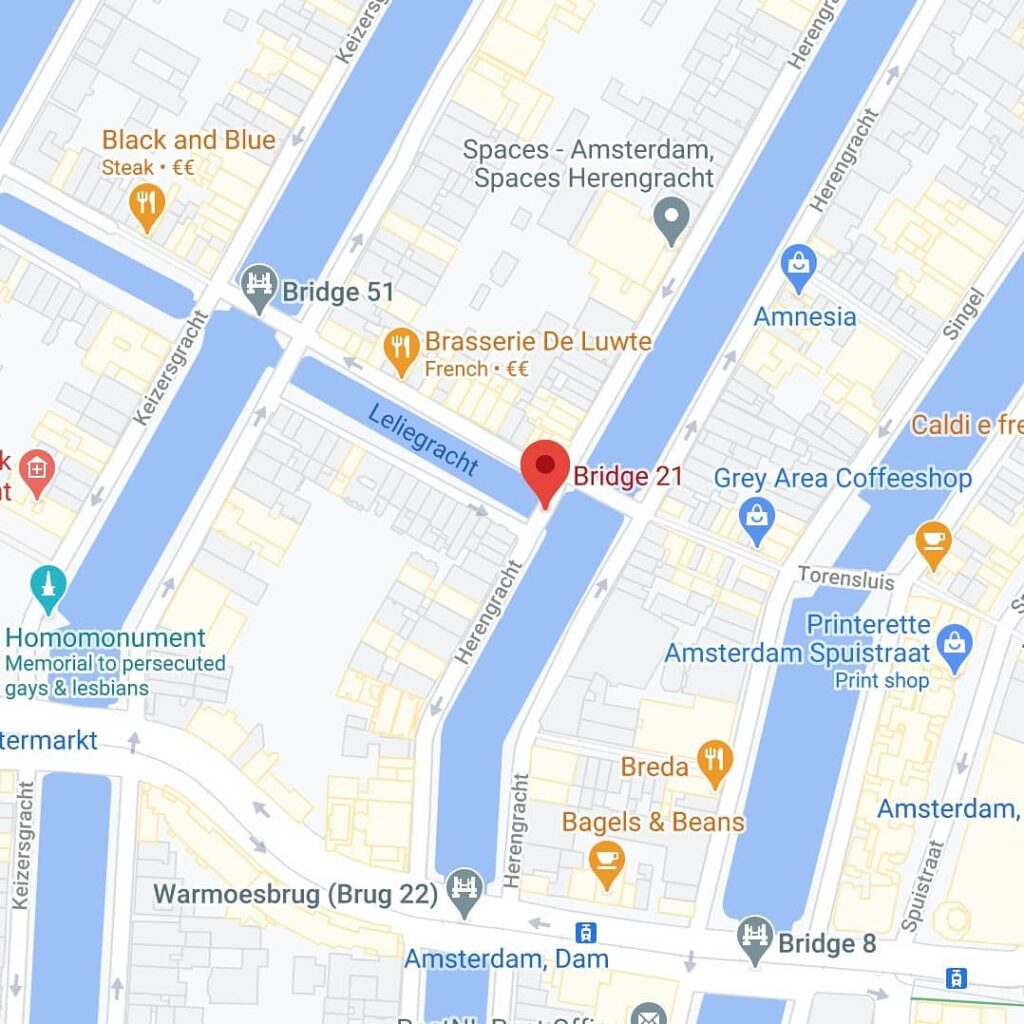
Along with Bridge 20, Bridge 21 is considered inadequate due to the height when there was a shift from shipping to car traffic. The lowering and widening was started and in July 1886 with the structures of both bridges being demolished and Bridge 21 was also lowered and widened at the same time. The project was completed at the beginning of 1887. It is now a girder bridge. Although of the same structure as the Anton Joling bridge, the latter is a municipal monument, and bridge 21 is not.

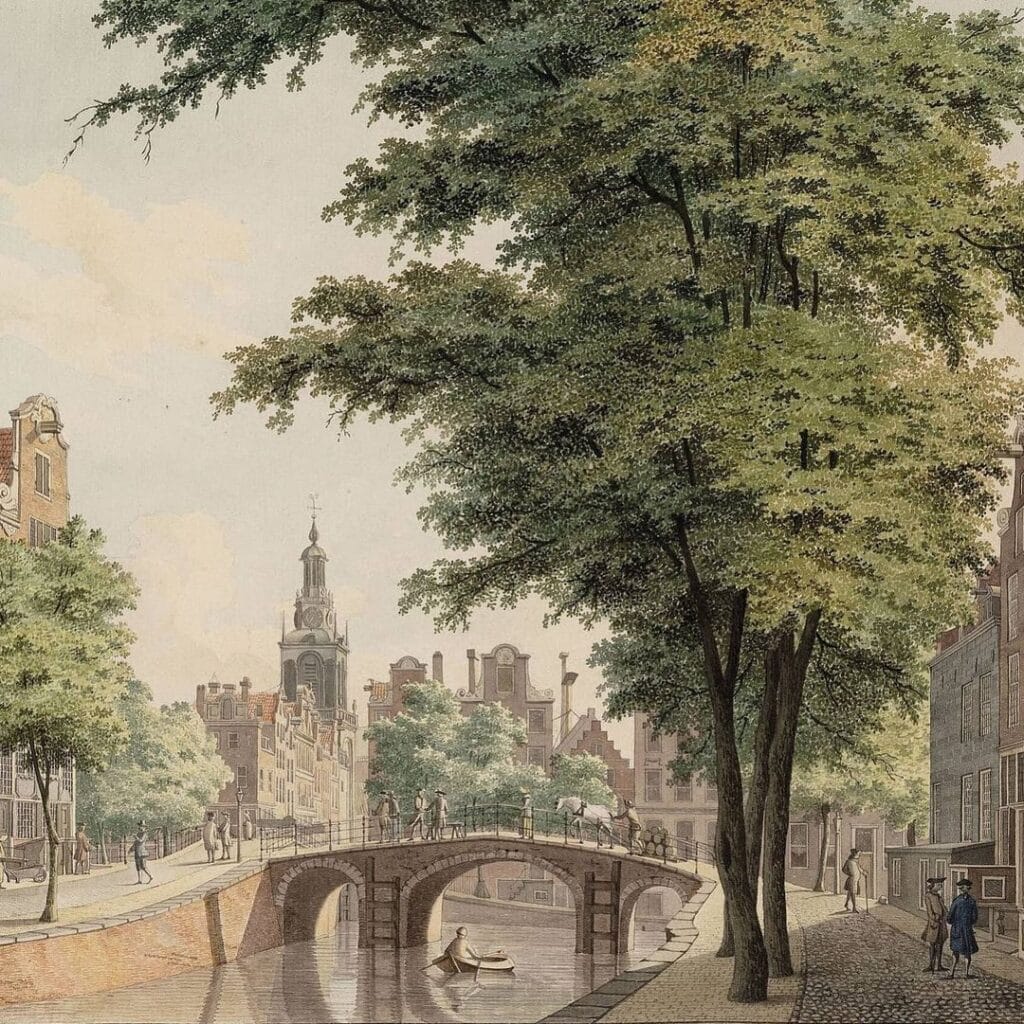
Amsterdam, Stadsarchief Amsterdam. The arch bridge by Hendrik Keun (1770)
Image 2 Amsterdam, Stadsarchief Amsterdam. Bridge 21 in around 1900.

