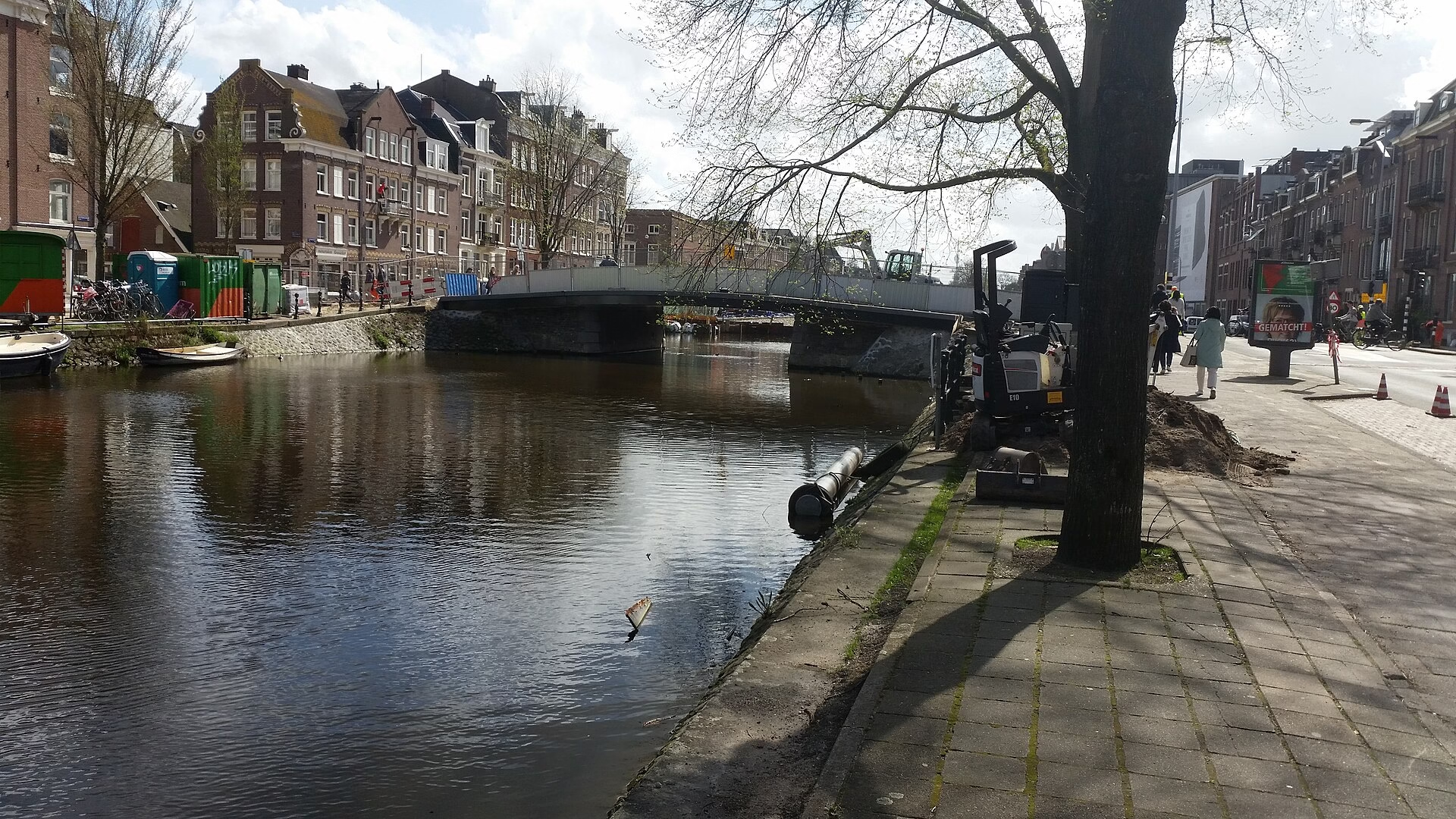
The Fire Brigade Bridge: Brug 79 Over the Boerenwetering, and the Ditch That Predates the City
Brug 79, the Brandweerbrug, takes the series further from the canal ring than it has yet been. This is Amsterdam-Zuid, well outside the seventeenth-century city, and the bridge spans a waterway that is older than every canal we have covered so far.
It carries the line of the Honthorststraat and the Eerste Jacob van Campenstraat across the Boerenwetering, between the Hobbemakade and the Ruysdaelkade, linking the museum quarter on one side to De Pijp on the other.
Etymology and Naming: Brandweer
The name is plain and, unusually for Amsterdam, entirely functional. Brandweer is the fire brigade, and the Brandweerbrug is named for a fire station beside it rather than for a merchant, a mayor, a trade or a saint.
That is a notable break from everything in the older city. Bridges in the canal ring take their names from what was traded there (the Reesluis, the Berensluis), from the buildings beside them (the Aalmoezeniersbrug, the Krijtbergbrug), from the canal they carry (the Leliesluis), or from people the city wants remembered (the Angenietje Swarthofbrug, the Frans Hendricksz. Oetgensbrug). Naming a bridge after the emergency services is a nineteenth- and twentieth-century habit, from a period when the city named things after their civic function rather than their commercial history.
The Boerenwetering: Older Than the Canal Ring
The water beneath this bridge is the interesting thing about it.
A wetering is a drainage watercourse, and the Boerenwetering, the farmers’ wetering, is exactly what its name says: a channel dug to drain agricultural land, running north into the city from the peat country to the south. It predates the canal ring. It predates the Singel. It belongs to the landscape Amsterdam was built on top of, rather than to the city itself.
This is the deep structure of the Dutch landscape showing through the street plan. Before there was a city here there was a bog, and before there was a bog worth farming there had to be drainage. The Boerenwetering carried water off the fields and boats to the market. When Amsterdam expanded south in the nineteenth century, it built over the farmland but kept the ditch, because the water still had to go somewhere.
The result is that a walk across Brug 79 crosses a piece of medieval agricultural engineering in the middle of a nineteenth-century residential district, a few hundred metres from the Rijksmuseum.

Urban Context: Between the Museums and De Pijp
The bridge sits on a social boundary as much as a geographic one. The Hobbemakade side belongs to the museum quarter, Honthorststraat runs towards the Museumplein, the Rijksmuseum, the Van Gogh Museum and the Concertgebouw, in a district of large late-nineteenth-century houses built for the prosperous.
The Ruysdaelkade side is De Pijp, built at speed in the same period as dense workers’ housing, and now among the most sought-after neighbourhoods in the city, home to the Albert Cuypmarkt and a great deal of the city’s eating and drinking.
The street names on either side are painters: Hobbema, Ruysdael, Van Campen, Honthorst. Amsterdam’s nineteenth-century expansion named its streets after the artists of the Golden Age in the same decades it was building the Rijksmuseum to house them, a whole district organised as a memorial to the century that had made the city rich.


Technical Specifications
- Bridge number: 79
- Name: Brandweerbrug
- Type: Fixed bridge
- Spans: Boerenwetering
- Carries: Honthorststraat – Eerste Jacob van Campenstraat
- Between: Hobbemakade and Ruysdaelkade
- District: Stadsdeel Zuid
Brug 79 is outside the canal ring and less thoroughly documented than the central crossings. If you know more about its construction date or designer, we would be glad to hear from you.
Sources Consulted
- In-text image: Baluster detail, Bridge 79 by Ceescamel, 2019, via Wikimedia Commons, CC BY-SA 4.0
- Featured image: The Brandweerbrug, Bridge 79 by Ceescamel, 2018, via Wikimedia Commons, CC BY-SA 4.0
- Brandweerbrug, Nederlandstalige Wikipedia
- Lijst van bruggen in Amsterdam, Nederlandstalige Wikipedia
- Boerenwetering, Nederlandstalige Wikipedia
- Hobbemakade, Nederlandstalige Wikipedia
- Bruggen van Amsterdam